
From Volume to Value: Using BI to Navigate the Moderation Era
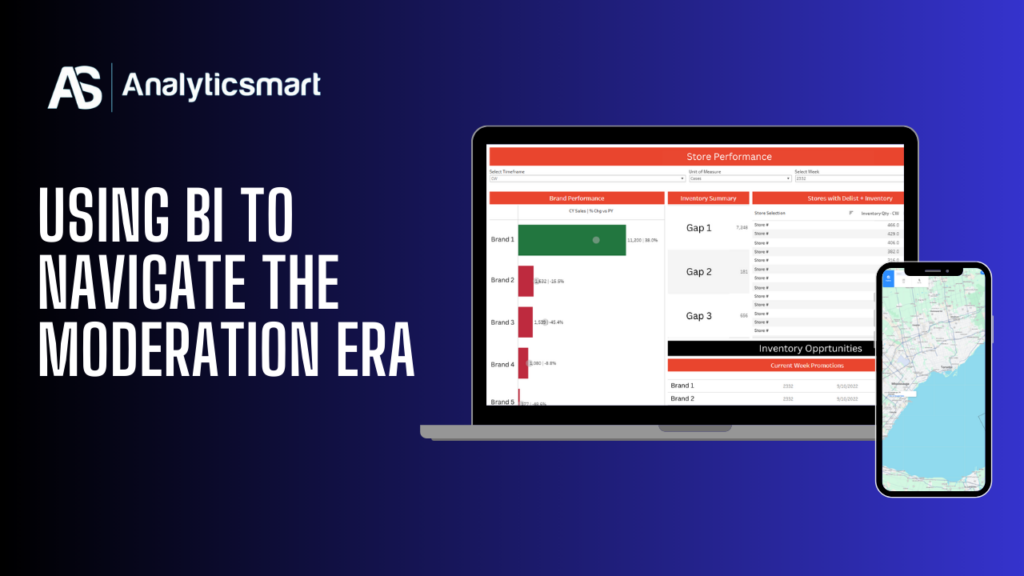
The numbers are hard to ignore. Across beer, wine, and spirits, the same uncomfortable story is playing out: dollar sales are declining alongside volume. After years of pandemic-era resilience and premiumization tailwinds, the beverage alcohol industry has entered what analysts are calling the Moderation Era — a structural shift in consumer behavior driven by health consciousness, generational change, and the rise of no-and-low alternatives.
For brands and distributors relying on legacy dashboards built around cases shipped and depletions per account, this environment is disorienting. The metrics that once signaled health can now mask fragility. A brand might be holding dollar share while losing household penetration. A distributor might hit volume targets while hemorrhaging margin on promotional activity. When volume was rising, these nuances didn’t matter much. Today, they are existential.
The brands winning in this environment are not the ones with the largest distribution footprints — they’re the ones that have realigned their intelligence around value creation rather than volume accumulation. And at the center of that realignment is a new generation of Business Intelligence (BI) dashboards built for occasion-based, value-driven measurement.
Why Volume Metrics Are Failing Alcohol Brands Right Now
Traditional alcohol industry KPIs were designed for a growth economy. Cases sold, distribution points gained, off-premise velocity, and depletions per store — these metrics made sense when the strategic question was: how fast are we growing? But in a moderation environment, the strategic question shifts: where is value actually being created, and how sustainable is it?
The problem with volume-first dashboards is what they exclude. They don’t tell you whether the volume you’re moving is incremental or simply traded from another SKU you also own. They don’t reveal whether a high-depletion account is consuming your product at healthy margins or only moving it via perpetual promotion. And critically, they don’t connect your performance to the occasions driving consumer purchase — which is precisely where behavioral shifts are concentrating.
Consumer research increasingly shows that moderation isn’t uniform. Drinking is not disappearing; it’s migrating. Occasions tied to socialization, celebration, and experience remain resilient or are actually growing. It’s habitual, solo, or routine consumption that is contracting. Brands that show up powerfully at high-value occasions — the Saturday dinner party, the craft cocktail bar visit, the holiday gift purchase — are outperforming brands that are simply available everywhere.
Volume metrics alone cannot show you which camp you’re in. That’s a value and occasion intelligence problem — and it’s exactly what modern BI is built to solve.
Redesigning the Dashboard: From Cases to Occasions
Shifting from volume to value in a BI environment isn’t just a matter of adding a new chart. It requires a fundamental redesign of the KPIs your sales and marketing teams wake up to every morning. At Analyticsmart, we work with beverage alcohol brands to restructure dashboards around four core value dimensions:
- Occasion-indexed performance: Mapping sales data against occasion segments — on-premise vs. off-premise, gifting vs. casual consumption, weekday vs. weekend — to understand where your brand is genuinely resonating.
- Revenue quality metrics: Moving beyond gross revenue to examine margin per case, promotional investment intensity, and net revenue per account — separating real growth from volume purchased through discounting.
- Consumer lifetime and occasion value: Tracking repeat purchase rates, basket co-occurrence, and account engagement depth to identify which distribution points are building brand equity versus depleting it.
- Occasion whitespace mapping: Identifying high-value occasion segments where your brand is underpenetrated relative to consumer demand — the places where real growth still lives.
When these dimensions replace simple volume trackers as the first thing a commercial team sees, decision-making changes fast. Sales reps stop chasing distribution points that won’t convert to margin. Marketing teams stop investing in reach where brand fit is poor. Trade spend gets concentrated in occasions that generate genuine consumer pull rather than retail push.
The shift from volume to value isn’t just a dashboard update — it’s a complete realignment of what your commercial team is optimizing for.
What Occasion-Based BI Looks Like in Practice
Consider a mid-sized spirits brand navigating soft on-premise performance. A volume-first dashboard would show declining depletions across accounts and flag a distribution problem — leading the team to push for more points of distribution or deeper promotional support.
An occasion-based BI dashboard tells a different story. It might reveal that the brand is actually over-indexed in low-margin, high-volume casual dining occasions where competitive pressure is fierce and consumer price sensitivity is high — while being significantly underpenetrated in premium cocktail bars and experiential dining venues where its positioning would command a price premium and drive stronger consumer association.
The actionable output isn’t more distribution. It’s a targeted redistribution of sales effort and trade investment toward higher-value occasion segments, combined with a marketing brief to develop the occasion-specific assets and activation toolkit the brand currently lacks.
This is the kind of insight that only becomes visible when your BI infrastructure is built to interrogate occasion-level data rather than aggregate volume. It requires integrating syndicated consumption research, POS data, distributor reporting, and your own CRM activity logs — and presenting them through an analytical lens oriented around value creation.
Analyticsmart’s beverage alcohol BI platform is specifically architected for this integration challenge. Our dashboards are built to combine retail sales analytics, market and competitor insights, and custom occasion-segment reporting in a single unified view — giving sales and marketing teams the intelligence they need to act on value opportunities, not just volume signals.
The Role of BI in Aligning Sales and Marketing Around Value
One of the underappreciated dimensions of the volume-to-value shift is the internal alignment challenge it creates. Sales teams are typically incentivized on volume and distribution metrics. Marketing teams build campaigns around reach and awareness. When the organization’s BI infrastructure speaks only the language of volume, both teams are implicitly oriented toward the same obsolete objective.
The right BI architecture creates a shared analytical language across commercial functions — one that connects marketing investment, sales execution, and business outcomes through value-oriented metrics. When a marketing team can see the occasion-level impact of a campaign activation in real time, and a sales team can see which accounts are producing disproportionate value-per-case, the organizations naturally begin to coordinate around the right objectives.
Custom dashboards with role-specific views are essential here. A national sales director needs a different lens than a regional account manager in the field. A brand manager building a campaign brief needs different occasion and consumer data than a trade marketing manager optimizing distributor programming. Good BI design serves all of these users with the right analytical frame for their decision, rather than dumping all available data into a single undifferentiated view that no one uses effectively.
Identifying Where Real Growth Still Lives
The Moderation Era is not a category death sentence. It is a redistribution. Consumer spending on alcohol is not disappearing — it is concentrating in occasions, formats, and experiences that deliver genuine value to a more selective consumer. The brands and distributors that thrive will be the ones that find and occupy those concentrations faster than the competition.
BI dashboards built for value intelligence are the mechanism for doing that at scale. They enable commercial teams to cut through aggregate softness and identify the specific occasion segments, channels, geographies, and consumer profiles where their brand has a genuine right to win. They create the feedback loops that let brands learn and adapt quickly as consumer behavior continues to evolve. And they create the operational discipline to resist the temptation of discounting to defend volume — one of the most value-destructive responses a brand can make in a moderation environment.
The brands navigating this era well have one thing in common: they stopped asking how much are we selling and started asking where are we winning, why, and what does that tell us about where we should go next. That is a fundamentally different question — and answering it well is what occasion-based, value-driven BI is built for.
How Analyticsmart Can Help
Analyticsmart provides BI and CRM solutions purpose-built for the beverage alcohol industry. Our platform integrates sales and distribution analytics, market and competitor intelligence, and custom occasion-based reporting into intuitive dashboards that help your commercial teams make smarter, faster decisions.
Whether you’re a supplier brand seeking to understand where your value is concentrating, or a distributor trying to align trade investment with margin opportunity, our platform is designed to give you the analytical foundation for competing in the Moderation Era.
Ready to shift from volume to value? Book a free consultation with the Analyticsmart team!
