
Planogram Services for Home & Personal Care Brands: How to Win the Shelf Before the Shopper Even Reaches It
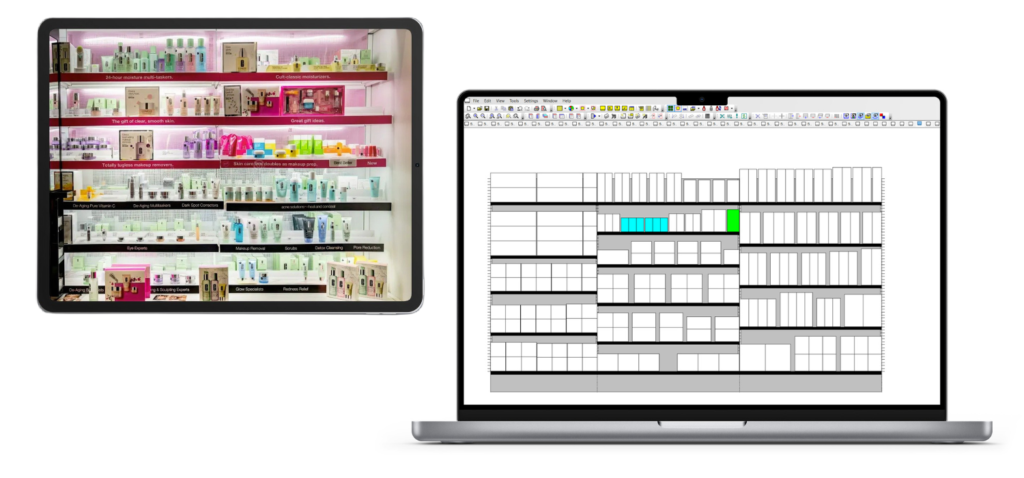
In home and personal care, the shelf is everything.
It’s the last three seconds of marketing. It’s where years of product development, brand investment, and consumer research either pay off — or get ignored. A shopper standing in the haircare aisle isn’t reading your brand story. They’re scanning. And in those few seconds, shelf placement, visual blocking, product adjacency, and facings determine whether your product goes in the basket or stays on the shelf.
That’s why planogram services aren’t just a retail operations function. For home and personal care brands, they’re a strategic growth lever — and the brands treating them that way are consistently pulling ahead of competitors who still think of planograms as a back-office task.
What Is a Planogram — and Why Does It Matter More Than Ever?
A planogram is a visual, data-driven diagram that defines exactly how products should be arranged on a retail shelf. It specifies which SKUs go where, how many facings each product receives, the sequence of brands and segments within a category, and how shelf space is allocated across a retailer’s fixture.
On the surface, it sounds like a logistics tool. In practice, it’s one of the most powerful commercial levers a home and personal care brand can pull.
Here’s why: retailers are more data-driven and more demanding than ever. Category captains and category advisors are expected to bring retailer-ready recommendations built on shopper data, sales velocity, and category insights — not just their own brand’s interest. The brands that can walk into a buyer meeting with a planogram backed by robust analytics don’t just win better shelf placement. They win trust, and with it, influence over how the entire category is merchandised.
For home and personal care specifically, the stakes are particularly high. These categories are enormous — spanning skincare, haircare, oral care, laundry, cleaning, and beyond — and they’re fiercely competitive. Shelf space is finite. Every facing your brand earns is a facing a competitor loses. And in a category where brand switching is common and trial is driven heavily by shelf visibility, a well-executed planogram can directly and measurably impact sales.
The Home & Personal Care Shelf: Unique Challenges, Unique Opportunities
Not every category faces the same planogram complexity. Home and personal care brands deal with a specific set of challenges that make smart planogram services essential rather than optional.
SKU proliferation is relentless. A leading haircare brand might have dozens of active SKUs across treatment types, hair types, formats, and sizes. Skincare is even more fragmented. Getting every SKU the right amount of space — and keeping underperformers from cannibalizing shelf real estate from top performers — requires continuous analytical attention, not a set-it-and-forget-it approach.
Shopper decision trees are complex. In personal care especially, shoppers navigate by need state, then brand, then format, then size — or sometimes in a completely different order depending on the subcategory. A planogram that ignores how shoppers actually shop the aisle will fail to convert even motivated buyers. Getting the flow right requires shopper research married to sales data.
Retail environments vary enormously. A mass-market retailer, a drug chain, a club store, and a grocery chain all have different shopper profiles, different fixture configurations, and different category strategies. A single planogram template doesn’t work across all of them. Home and personal care brands need planograms that flex by channel and by retailer — and that’s a significant operational and analytical challenge.
New product launches need shelf space to succeed. Innovation is the lifeblood of home and personal care. But a new product that doesn’t get the right placement — or gets buried at the wrong end of the shelf — is a launch that underperforms before consumers even have a chance to find it. Planogram strategy is launch strategy.
What Best-in-Class Planogram Services Actually Include
When home and personal care brands work with a planogram services partner who understands their category, the scope goes well beyond drawing shelf diagrams.
Data integration and category analysis. The foundation of any strong planogram is data — POS sales data, syndicated data (Nielsen, Circana), retailer-provided metrics, shopper panel data, and loyalty card insights where available. A good planogram services team ingests all of it, identifies performance patterns at the SKU and segment level, and builds shelf recommendations that are grounded in category realities, not assumptions.
Space-to-sales optimization. One of the most common planogram mistakes is allocating shelf space based on historical convention rather than current sales velocity. Space-to-sales analysis ensures that each SKU’s facing count is proportional to its contribution to category sales — so your fastest-moving products are never under-spaced, and slow movers aren’t holding onto facings they haven’t earned.
Shopper flow and adjacency strategy. Where a product sits relative to other products matters enormously in home and personal care. Premium items need premium positioning. Complementary products benefit from adjacency — shampoo and conditioner, body wash and lotion. Planogram services that incorporate shopper behavior data ensure that the shelf layout mirrors the way shoppers actually navigate and shop the category.
Retailer-customized planograms. A planogram that works at a mass retailer won’t be right for a drug chain. Effective planogram services build retailer-specific recommendations that account for fixture dimensions, retailer category strategy, shopper demographics, and store-level performance variation. This is what elevates a brand from vendor to valued category advisor.
New item integration. When a new SKU launches, it needs a home — and that home needs to be earned, not just assumed. Planogram services include recommendations for where new items belong in the shelf set, which items they displace, and what the expected category impact will be. This makes new item sell-in conversations with buyers dramatically more productive.
Compliance tracking and retail execution measurement. A planogram only delivers its intended results if it’s executed correctly in-store. Leading planogram services include tools and processes for tracking whether shelf sets are being built as designed, identifying compliance gaps, and measuring the sales impact of correct versus incorrect execution.
Planograms as a Retailer Relationship Strategy
Here’s a perspective that many home and personal care brands underutilize: planogram services aren’t just about your brand. They’re about the category.
Retailers don’t want vendor planograms. They want category planograms. And the brand that can provide a planogram recommendation built on unbiased category data — one that optimizes the performance of the entire shelf, not just maximizes its own facings — becomes indispensable to the buyer.
This is the category advisor or category captain model, and it’s one of the highest-value positions a home and personal care brand can occupy. When you’re the brand that helps the retailer grow the category, you earn preferential treatment on space allocation, new item placement, promotional support, and buyer access. Those advantages compound over time into a durable competitive edge that’s very hard for competitors to erode.
The brands in home and personal care that have mastered this approach — and there are several across skincare, haircare, and household cleaning — didn’t get there by accident. They invested in planogram services backed by genuine analytical rigor, and they showed up to buyer meetings with category stories, not just brand stories.
Measuring the ROI of Planogram Services
For brands that haven’t invested heavily in planogram services, it’s reasonable to ask: what’s the return?
The honest answer is that it depends on the quality of the service and the rigor of execution. But the evidence across home and personal care categories is consistent: brands that invest in data-driven planogram strategy see meaningful, measurable results.
The clearest ROI drivers include sales lift from space-to-sales realignment — getting more facings for your highest-velocity SKUs almost always improves sales. Reduction in out-of-stocks from better space planning. Improved new item velocity when launches are backed by planogram strategy that secures the right placement from day one. And the harder-to-quantify but very real value of stronger retailer relationships that open doors across the commercial calendar.
For home and personal care brands competing in mature, crowded categories, planogram services often deliver a better return than incremental trade spend — because they improve the baseline efficiency of every dollar already being spent.
Why AnalyticsMart for Planogram Services
Planogram services are only as good as the data and expertise behind them. Generic solutions built for broad CPG don’t account for the specific dynamics of home and personal care categories — the SKU complexity, the shopper decision trees, the channel variation, the premium versus value shelf architecture.
AnalyticsMart brings together category analytics, retail execution intelligence, and planogram expertise purpose-built for brands that compete in these categories. From space-to-sales optimization to retailer-customized shelf sets to new item launch strategy, the platform gives home and personal care brands the tools and the insights to win at the shelf — consistently, at scale, and across every retail environment that matters.
The shelf is where your brand wins or loses. Make sure you’re going in with the best possible strategy.
Want to see how AnalyticsMart’s planogram services can improve your shelf performance? Learn more about our planogram services.
