The Evolution of Planograms: From Shelf Layouts to Revenue Optimization Engines
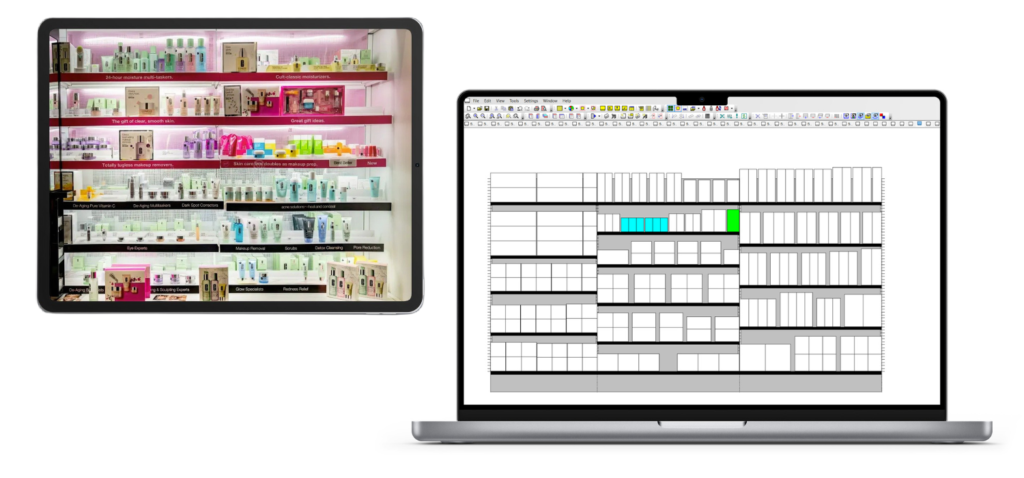
For decades, planograms have been one of the foundational tools of retail merchandising. Traditionally viewed as simple visual guides that instructed stores where products should be placed, planograms served a straightforward purpose: create consistency across locations and ensure products were displayed according to company standards.
Today, however, planograms have evolved far beyond shelf diagrams. In modern retail environments, they have become strategic business tools capable of influencing revenue, profitability, customer experience, inventory efficiency, and category performance.
As retailers and consumer packaged goods (CPG) manufacturers face increasing competition and changing consumer expectations, the role of planograms is undergoing a significant transformation. What was once a compliance exercise is now becoming a critical component of retail growth strategies.
The Traditional Role of Planograms
Historically, planograms were developed to standardize product placement across multiple stores.
Retailers used them to answer questions such as:
- Which products should occupy shelf space?
- How much shelf space should each product receive?
- Where should products be positioned?
- How should categories be organized?
The objective was simple: create a consistent shopping experience while maximizing available shelf space.
For years, this approach worked effectively because retail environments were relatively stable. Consumer preferences evolved slowly, product assortments remained manageable, and store layouts changed infrequently.
However, retail is no longer operating under those conditions.
Why Traditional Planograms Are No Longer Enough
Modern retailers face challenges that did not exist a decade ago.
These include:
- Rapidly changing consumer preferences
- Increasing SKU proliferation
- Omnichannel shopping behavior
- Supply chain disruptions
- Higher customer expectations
- More intense competition
A static planogram created six months ago may no longer reflect current customer demand.
For example, a beverage category experiencing strong growth may require additional shelf allocation. If shelf space remains unchanged despite shifting demand patterns, retailers risk lost sales opportunities.
The modern retail environment requires dynamic decision-making supported by data.
The Shift Toward Data-Driven Planograms
Today’s leading retailers are using data to transform planogram design.
Rather than relying solely on historical assumptions, organizations now incorporate:
- Point-of-sale data
- Inventory information
- Customer purchasing patterns
- Local demographics
- Seasonal trends
- Promotional performance
- Market intelligence
This allows retailers to make smarter decisions about shelf allocation.
Products that generate higher revenue, stronger margins, or faster inventory turnover can receive greater visibility and shelf space.
The result is a planogram that reflects actual customer behavior rather than theoretical assumptions.
Planograms as Revenue Optimization Tools
One of the most significant developments in retail merchandising is the recognition that shelf space is a valuable business asset.
Every inch of shelf space has an opportunity cost.
When a low-performing product occupies prime shelf placement, retailers may be sacrificing revenue that could be generated by higher-performing alternatives.
Modern planogram optimization focuses on maximizing:
- Sales per shelf foot
- Gross margin contribution
- Category growth
- Inventory productivity
- Customer conversion
By analyzing performance data, retailers can allocate shelf space more strategically and improve overall profitability.
The Role of Analytics in Modern Planograms
Analytics has become a key driver of planogram success.
Retailers can now evaluate:
- Which products drive basket growth
- Which products increase category profitability
- Which placements improve conversion rates
- Which categories deserve additional space
Advanced analytics platforms enable retailers to identify patterns that would be difficult to detect manually.
Instead of relying on intuition, decision-makers can use measurable evidence to support shelf planning strategies.
This data-driven approach creates a stronger connection between merchandising activities and financial outcomes.
The Role of Analytics in Modern Planograms
Analytics has become a key driver of planogram success.
Retailers can now evaluate:
- Which products drive basket growth
- Which products increase category profitability
- Which placements improve conversion rates
- Which categories deserve additional space
Advanced analytics platforms enable retailers to identify patterns that would be difficult to detect manually.
Instead of relying on intuition, decision-makers can use measurable evidence to support shelf planning strategies.
This data-driven approach creates a stronger connection between merchandising activities and financial outcomes.
The Future of Planograms
The next generation of planograms will be increasingly powered by artificial intelligence and automation.
Emerging technologies are enabling retailers to:
- Predict demand fluctuations
- Automatically recommend shelf changes
- Monitor compliance using computer vision
- Optimize space allocation continuously
- Personalize assortments by store
Rather than updating planograms quarterly or annually, retailers will be able to make adjustments in near real-time.
This level of agility will become essential as consumer expectations continue to evolve.
Conclusion
The evolution of planograms reflects a broader transformation occurring across the retail industry. What began as a tool for shelf organization has become a powerful mechanism for revenue optimization, customer experience improvement, and operational efficiency.
Organizations that continue to view planograms solely as compliance documents risk missing significant growth opportunities. Those that embrace data-driven planogram strategies will be better positioned to improve profitability, strengthen category performance, and deliver superior shopping experiences.
As retail becomes increasingly data-centric, the future of planograms lies not in static shelf diagrams but in intelligent systems capable of driving measurable business outcomes.
