
The Future of Retail Execution: Why Merchandising Is Becoming a Data Science Function
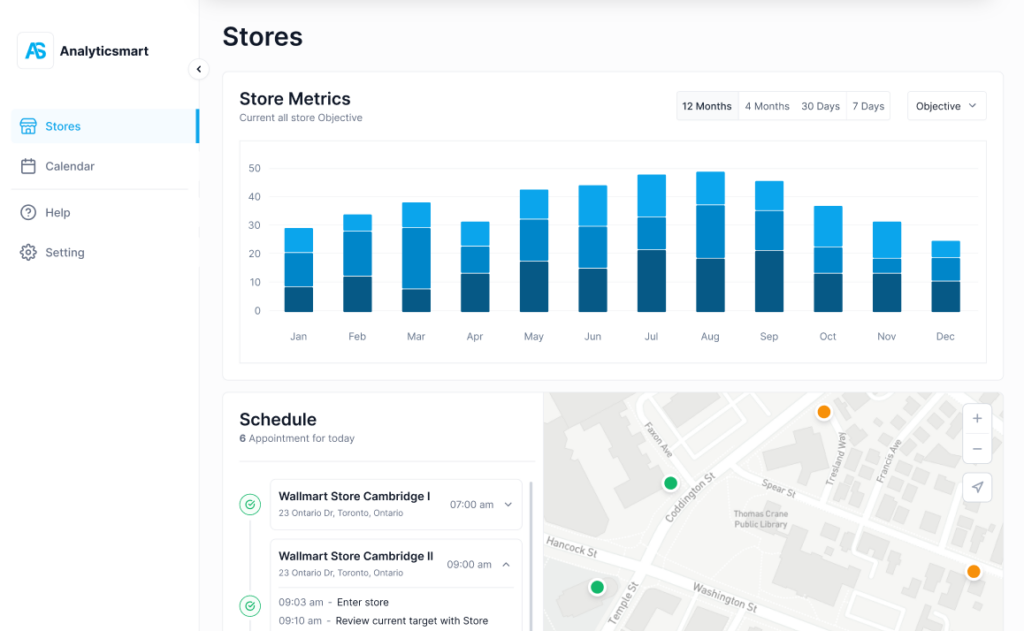
For decades, merchandising was viewed primarily as an operational discipline. Field teams visited stores, checked product placement, verified promotions, corrected pricing discrepancies, and reported issues back to headquarters. While these activities remain critical, the retail landscape has fundamentally changed.
Today, retailers and Consumer Packaged Goods (CPG) brands operate in an environment where every shelf decision impacts revenue, customer experience, and competitive positioning. The traditional approach of relying on manual audits, spreadsheets, and delayed reporting is no longer sufficient.
A new era is emerging—one where merchandising is increasingly becoming a data science function. Organizations are leveraging artificial intelligence, predictive analytics, computer vision, and real-time business intelligence to optimize retail execution at an unprecedented scale.
The future of merchandising is not simply about ensuring products are placed correctly on shelves. It is about transforming store-level data into actionable intelligence that drives business growth.
The Evolution of Merchandising
Historically, merchandising focused on compliance.
Field representatives were responsible for verifying:
- Product availability
- Promotional execution
- Shelf placement
- Pricing accuracy
- Planogram compliance
- Competitive activity
Although these tasks remain essential, the process was often reactive. Problems were identified after they occurred, limiting an organization’s ability to prevent revenue losses.
For example, if a key product experienced stockouts across multiple locations, the issue might not be discovered until a merchandiser visited the store days later. By that time, valuable sales opportunities had already been lost.
Modern retailers cannot afford such delays.
Consumer expectations, supply chain complexities, and intense market competition require organizations to make decisions faster than ever before.
This shift has elevated the importance of data-driven merchandising.
Why Data Is Becoming the Foundation of Retail Execution
Retail organizations generate enormous amounts of data every day.
This includes:
- Point-of-sale transactions
- Inventory levels
- Store traffic
- Promotion performance
- Shelf images
- Loyalty program insights
- Field team reports
- Competitor intelligence
The challenge is no longer collecting data.
The challenge is extracting meaningful insights from it.
This is where data science enters the merchandising equation.
Advanced analytics platforms can process millions of data points and identify patterns that would be impossible for humans to detect manually.
Instead of asking:
“Did the promotion execute correctly?”
Organizations can now ask:
“Which stores are most likely to experience compliance failures next week?”
This predictive capability represents a significant shift in retail execution strategy.
The Rise of Predictive Merchandising
Traditional merchandising is largely descriptive.
It explains what happened.
Data science enables predictive merchandising.
It helps organizations understand what is likely to happen next.
Predictive models can identify:
- Potential out-of-stock risks
- Declining category performance
- Stores with low compliance probability
- Inventory imbalances
- Promotional execution risks
- Emerging consumer trends
For example, a beverage company may analyze historical sales data, weather patterns, local events, and inventory information to predict where demand spikes are likely to occur.
Merchandising teams can then prioritize those locations before issues arise.
This proactive approach improves product availability, reduces lost sales, and increases customer satisfaction.
Artificial Intelligence Is Changing Retail Execution
Artificial Intelligence (AI) is rapidly becoming one of the most influential technologies in merchandising.
AI-powered systems can automate tasks that previously required significant manual effort.
Applications include:
Shelf Image Recognition
Computer vision technology can analyze shelf photos and automatically detect:
- Out-of-stocks
- Incorrect pricing
- Missing promotional materials
- Competitor products
- Shelf share compliance
What once required hours of manual review can now be completed within seconds.
Automated Opportunity Detection
AI algorithms continuously monitor execution data and identify stores requiring immediate attention.
Instead of reviewing thousands of reports, managers receive prioritized recommendations.
Demand Forecasting
Machine learning models improve forecast accuracy by analyzing multiple variables simultaneously.
This helps merchandising teams allocate resources more effectively and focus on locations with the highest revenue potential.
Real-Time Visibility Is Becoming Essential
One of the biggest limitations of traditional merchandising programs is delayed visibility.
By the time reports reach decision-makers, the information may already be outdated.
Modern merchandising platforms provide real-time visibility into store performance.
This allows organizations to:
- Monitor compliance instantly
- Respond to execution issues quickly
- Improve field team productivity
- Reduce reporting delays
- Accelerate decision-making
Real-time intelligence creates a direct connection between headquarters and store shelves.
As a result, organizations can act on opportunities while they still exist.
The Growing Importance of Retail Execution Analytics
Retail execution analytics is emerging as a critical competitive advantage.
Organizations are increasingly measuring metrics such as:
- Sales per shelf foot
- Promotion effectiveness
- Compliance trends
- Visit productivity
- Product availability
- Shelf share performance
- Revenue impact of execution activities
These metrics provide a deeper understanding of how merchandising activities influence business outcomes.
Instead of evaluating activity levels, companies can evaluate performance and impact.
This shift helps merchandising teams become strategic contributors to revenue growth.
The Convergence of Merchandising and Business Intelligence
Another major trend is the integration of merchandising data with broader business intelligence systems.
Historically, merchandising data often existed in separate systems.
Today, organizations are connecting retail execution data with:
- CRM platforms
- Sales systems
- ERP systems
- Inventory management tools
- Customer analytics platforms
- Financial reporting solutions
This creates a unified view of business performance.
Executives can see how merchandising activities influence sales, profitability, customer satisfaction, and market share.
The result is more informed decision-making across the organization.
Why CPG Brands Are Investing in Data-Driven Merchandising
CPG manufacturers face increasing pressure to maximize retail performance.
Winning shelf space is no longer enough.
Brands must ensure consistent execution across thousands of locations.
Data-driven merchandising enables brands to:
- Improve retailer collaboration
- Increase planogram compliance
- Identify growth opportunities
- Reduce out-of-stocks
- Strengthen promotional execution
- Optimize field team deployment
The ability to convert execution data into actionable insights provides a significant competitive advantage.
As retailers become more data-driven, brands must evolve accordingly.
Building a Modern Merchandising Strategy
Organizations looking to modernize merchandising should focus on several key areas.
Invest in Data Collection
High-quality decisions require high-quality data.
Organizations should establish reliable mechanisms for collecting execution, inventory, and sales information.
Leverage Automation
Automating repetitive tasks improves productivity and allows teams to focus on strategic activities.
Adopt Advanced Analytics
Predictive and prescriptive analytics help organizations move beyond historical reporting.
Integrate Business Systems
Connecting merchandising data with enterprise systems creates a more complete picture of performance.
Foster a Data-Driven Culture
Technology alone is not enough.
Organizations must encourage teams to use data as a foundation for decision-making.
The Future of Merchandising
The role of merchandising is evolving rapidly.
What was once considered a field-based operational function is becoming a sophisticated discipline powered by analytics, AI, and real-time intelligence.
In the coming years, successful retailers and CPG brands will increasingly rely on predictive insights rather than reactive reporting. Merchandising teams will spend less time collecting information and more time acting on it.
Organizations that embrace this transformation will gain greater visibility, stronger execution, improved customer experiences, and ultimately, higher revenue growth.
The future of retail execution belongs to companies that treat merchandising not merely as a store activity, but as a strategic data science function capable of driving measurable business outcomes.
