Grocery & Supermarket Planograms: How AI Is Solving the Out-of-Stock Crisis
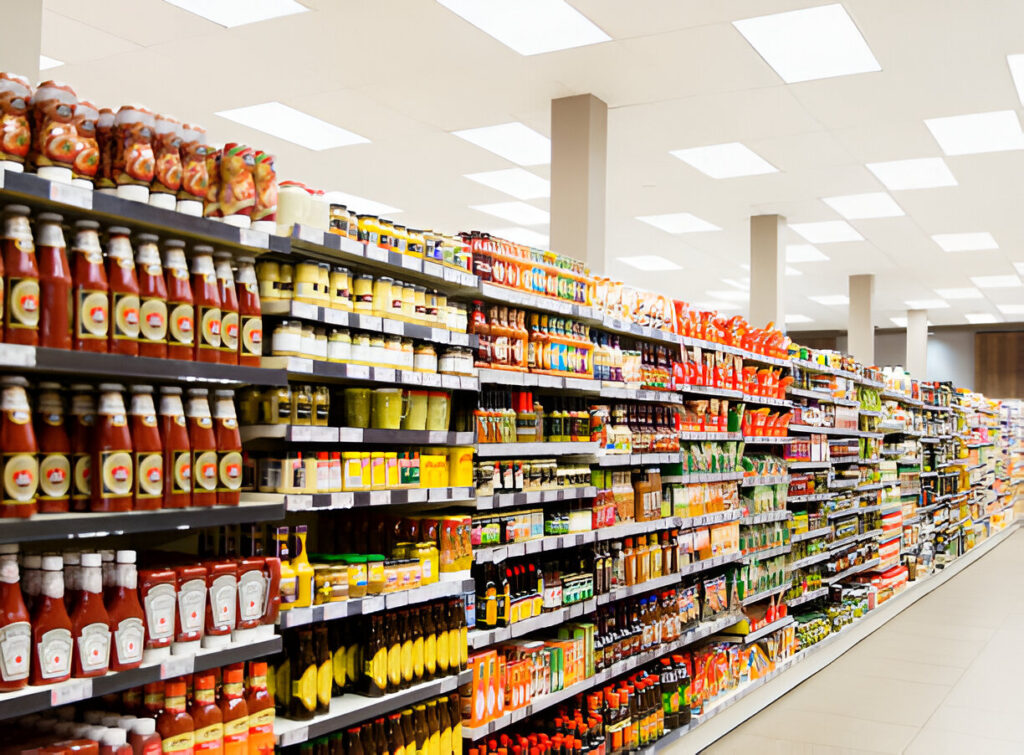
Grocery retail runs on razor-thin margins and enormous SKU counts — a mid-size supermarket can carry thirty thousand or more individual items across dozens of categories, each with its own sales velocity, seasonality pattern, and supplier lead time. In that environment, on-shelf availability isn’t a nice-to-have metric buried in a quarterly report; it’s one of the largest hidden drivers of lost revenue in the entire grocery industry. Industry studies have consistently placed out-of-stock losses in the billions of dollars annually across grocery retail — and most of that loss never shows up as a clean, attributable line item. It shows up as a shopper who quietly switched brands, switched stores, or simply skipped the purchase entirely and never mentioned it to anyone.
Why Grocery Out-of-Stocks Are Different From Other Retail Formats
Unlike specialty or cosmetics retail, grocery combines extremely high SKU density with extremely high shopper visit frequency — the same customer might shop the same store two or three times a week. That combination means availability failures compound quickly: a single bad experience finding an empty shelf can shift a shopper’s loyalty permanently, not just cost a single transaction. And manual shelf checks simply cannot keep pace with a store of that size and turnover rate. A single associate physically walking every aisle is realistically checking only a fraction of the store, on a fraction of the days, which means the vast majority of stockout windows go completely undetected until the next scheduled count.
The Hidden Mechanics of a Grocery Out-of-Stock
It’s worth understanding why stockouts happen even when inventory systems say the product should be on the shelf. Phantom inventory — where the point-of-sale and warehouse system both show stock, but the actual product isn’t physically on the shelf due to a backroom placement error, a planogram compliance gap, or simple misplacement — is one of the most common and hardest-to-detect causes of lost grocery sales. Traditional inventory management systems are blind to this because they’re tracking what should exist, not what a shopper actually sees when they reach the shelf.
Where AI-Powered Merchandising Fits
1. Image recognition for real-time shelf scanning. Instead of manual walks, field teams or in-store cameras capture shelf images that AI compares against the approved planogram, instantly flagging gaps, low-stock zones, and planogram non-compliance — including phantom-inventory situations that a POS system alone would never catch.
2. Predictive replenishment signals. AI models that combine point-of-sale velocity data with shelf-image evidence can flag SKUs trending toward a stockout before the shelf actually goes empty, turning reactive restocking into proactive, scheduled replenishment rather than a fire drill after the fact.
3. Planogram-to-execution feedback loops. Grocery category managers can see, category by category and store by store, where planned shelf space consistently underperforms because of availability issues rather than genuine demand issues — a distinction that’s nearly impossible to see clearly with periodic manual audits alone.
4. Supplier accountability data. When out-of-stocks are tracked systematically rather than anecdotally, grocery chains gain the evidence needed to hold CPG suppliers accountable for fill-rate commitments, turning a vague operational complaint into a specific, data-backed conversation in the next category review.
Beyond Availability: Category Performance at Scale
AI-powered shelf intelligence doesn’t stop at answering “is the shelf full.” Done well, it creates a continuous data layer connecting planogram compliance, category sales performance, and supplier delivery performance — letting grocery chains hold CPG suppliers accountable for their fill-rate commitments and letting category managers make faster, evidence-based reset decisions instead of relying on a quarterly manual audit that’s already outdated by the time it’s compiled.
What This Means for Store Operations Teams
For store-level operations, the shift from manual to AI-assisted shelf monitoring changes the daily rhythm of the job. Instead of associates spending hours on routine, low-value shelf walks, AI-flagged priority lists let store teams focus their limited time on the specific aisles and SKUs that actually need attention that day. That’s a meaningful efficiency gain in an industry where labor hours are one of the tightest-managed costs on the P&L, and it means the humans in the store are spending their time on judgment-based tasks rather than repetitive visual scanning that a camera and an algorithm can do faster and more consistently.
Seasonal and Promotional Complexity
Grocery retail also carries a layer of complexity that many other categories don’t face at the same scale: constant promotional resets, seasonal category shifts, and holiday-driven demand spikes that can turn a normally well-stocked category into a stockout risk within days. AI-driven shelf monitoring is particularly valuable during these high-volatility windows, because it can detect emerging gaps in near real time rather than waiting for the next scheduled audit cycle — which, during a holiday promotional period, might be too late to matter.
Fresh and Perishable Categories: A Special Case
Availability challenges are especially acute in fresh and perishable categories — produce, dairy, bakery, deli — where the cost of an out-of-stock is compounded by the cost of overstock spoilage on the other side. Unlike shelf-stable CPG, fresh categories require a merchandising approach that balances availability against waste, and AI-driven demand signals are particularly valuable here because they can help store teams calibrate order quantities more precisely than manual par-level systems, which tend to default to conservative overstocking simply to avoid the more visible failure of an empty shelf.
The Role of Supplier Collaboration
Out-of-stocks aren’t solely a retailer-side problem, and the most effective grocery chains treat resolution as a shared responsibility with their CPG suppliers rather than an internal-only fix. When AI-driven shelf data reveals a recurring pattern — a specific SKU consistently going out of stock in a specific region, for example — that evidence can be shared directly with the supplier’s category management or sales team as the basis for a joint action plan, whether that means adjusted delivery schedules, improved forecast accuracy on the supplier side, or a packaging or case-pack change that’s contributing to shelf-restocking friction at store level. Retailers that share this kind of granular, store-level availability data with suppliers tend to resolve chronic stockout patterns faster than those that keep the data internal and simply escalate complaints without evidence attached.
Integrating Store-Level and Chain-Level Views
One of the underappreciated benefits of AI-powered shelf intelligence in grocery is the ability to move fluidly between a single store’s daily execution reality and a chain-wide strategic view. A store manager needs to know which specific aisle needs attention this afternoon. A category director needs to know whether a chain-wide pattern of stockouts in a given category points to a supplier fill-rate problem, a planogram design flaw, or a labor coverage issue at a subset of stores. Traditional manual audit processes rarely produce data clean enough to support both views from the same source — one is usually built for local operations and the other for corporate reporting, with no easy way to reconcile them. A unified, AI-driven data layer solves that by generating both views from the same underlying shelf-image evidence.
The Takeaway
Grocery retailers don’t need more headcount to solve on-shelf availability — they need visibility that scales with SKU count and shopper visit frequency in a way manual processes never could. AI-driven planogram compliance and image recognition give supermarket chains a practical way to close the availability gap, hold suppliers accountable with real data, and free up store labor for higher-value work, all without adding a single extra store visit to the schedule.
