How Cosmetic Merchandising Has Evolved Over the Years

The world of cosmetics has always thrived on innovation—not just in product formulas and packaging, but also in how these products are presented and sold. Cosmetic merchandising, a critical function of retail strategy, has transformed dramatically over the years. What began as simple countertop displays and department store counters has evolved into a complex ecosystem powered by data analytics, artificial intelligence (AI), and smart merchandising solutions.
In this blog, we’ll explore the major phases of cosmetic merchandising evolution, key technological advancements, and how Analyticsmart’s Cosmetic Merchandising App is empowering today’s merchandisers with smarter tools to drive retail excellence.

The Early Days of Cosmetic Merchandising
Cosmetic merchandising in its infancy was all about visibility and glamour. Brands like Estée Lauder and Revlon led the way with beautifully curated counters, uniformed beauty advisors, and vibrant displays to entice shoppers in department stores. Merchandising was primarily visual and manual—dependent on artistic display skills and in-store promoters.
Key Characteristics:
- Window and counter displays
- Seasonal visual themes
- Sales reps restocking manually
- Limited data on consumer behavior
There was little room for dynamic decision-making. What was placed on the shelf stayed there until sales trends or seasons dictated a change. There was virtually no real-time feedback loop to inform merchandising effectiveness.
The Rise of Category Management and POS Analytics
By the late 1990s and early 2000s, the beauty industry began integrating category management principles, influenced heavily by grocery and big-box retailers. Merchandising became more data-informed, thanks to advances in Point-of-Sale (POS) systems.
Major Advancements:
- Introduction of planograms
- POS data to track inventory and sales
- Shelf space allocation based on sales velocity
- Greater emphasis on stock rotation and freshness
Cosmetic brands began to rely more heavily on planogram compliance and data from retailers to optimize product placement. This improved efficiency but still required field merchandisers to perform manual checks and adjustments in stores.
Digital Transformation and E-Commerce Influence
The 2010s brought the e-commerce revolution. Direct-to-consumer brands like Glossier and ColourPop demonstrated the power of digital merchandising. Online product placement, influencer partnerships, and virtual try-ons started influencing in-store experiences.
Brick-and-mortar retailers responded with omnichannel merchandising strategies, aligning physical displays with online promotions and social media campaigns. Merchandising teams had to adapt to:
- QR codes and mobile integrations
- Virtual shelf simulations
- Rapid product refresh cycles
- Customer journey mapping from online to offline
Digital displays, smart mirrors, and in-store tablets became common, particularly in flagship stores and urban retail spaces.
The Role of Artificial Intelligence in Modern Merchandising
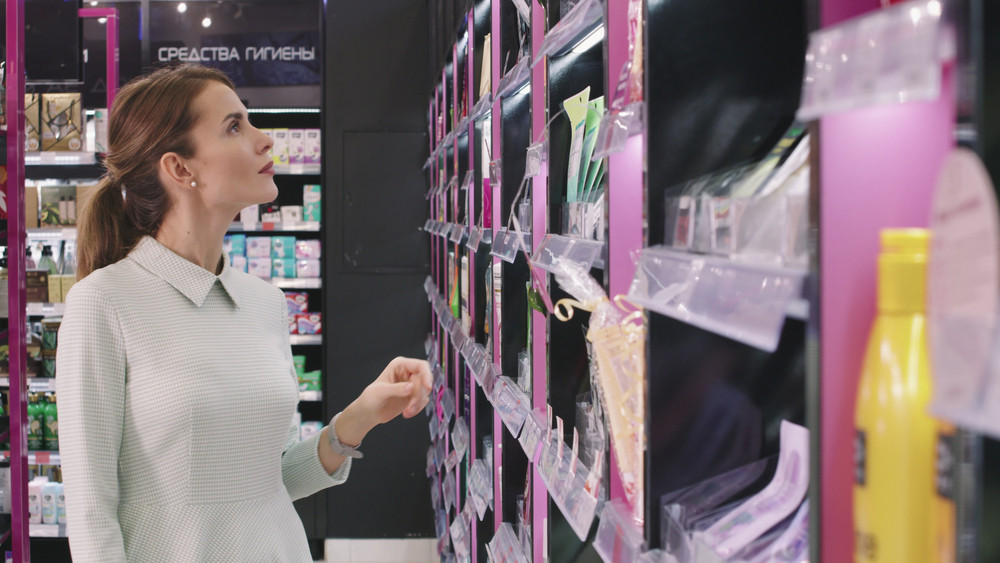
Today, the beauty industry is entering a new era—AI-powered merchandising. Artificial intelligence and machine learning algorithms are transforming how brands approach shelf management, compliance, and consumer engagement.
Key AI-Driven Innovations:
- Image recognition to check planogram compliance
- Predictive analytics to forecast inventory needs
- Sentiment analysis from social and review platforms
- Consumer behavior mapping using camera and heatmap analytics
Brands no longer guess what works—they know what works, in real time.
Mobile Technology & Real-Time Execution
Perhaps the biggest shift has come from mobile-first solutions that empower merchandisers directly in the field. Today’s merchandisers use apps to report store conditions, check planograms, receive real-time tasks, and capture images—streamlining execution and reducing the time lag between data collection and action.
This brings us to one of the leading solutions redefining beauty merchandising in real time: the Merchandising App by Analyticsmart.

How the Merchandising App by Analyticsmart is Transforming Beauty Retail
The Merchandising App by Analyticsmart is designed for the modern merchandising team—agile, data-driven, and customer-focused. It provides an all-in-one platform for merchandisers to plan, execute, and monitor store-level activities with precision and speed.
Key Features:
📸 Image Recognition for Compliance
Merchandisers can upload shelf photos, and the app instantly checks planogram compliance using AI. This reduces human error and speeds up audits.
📊 Real-Time Analytics
The app connects to real-time sales and inventory data, allowing field reps to prioritize tasks and stores based on performance insights.
📍 Geo-Tracking and Smart Routing
Field teams can optimize store visits with GPS-based routing and check-in/check-out tracking, ensuring efficient time management.
🔄 Instant Task Assignments
Head office teams can push dynamic tasks to merchandisers’ phones in response to stock-outs, promotional opportunities, or local events.
🛍️ Integrated Visual Dashboards
Brand managers get a unified view of compliance, execution, and performance across all store locations.
Real-World Impact for Cosmetic Brands
Cosmetic brands and retailers using Analyticsmart’s Merchandising App have seen dramatic improvements in:
- Speed of execution: Reduced time between identifying issues and resolving them
- Planogram compliance: Up to 98% accuracy using AI image analysis
- Retail ROI: Better alignment between shelf space and sales performance
- Field team efficiency: 20–30% improvement in store coverage and visit productivity
In an industry where shelf presentation can influence 70% of purchase decisions, real-time insights are not a luxury—they’re a necessity.
What’s Next for Cosmetic Merchandising?
As we look ahead, the future of cosmetic merchandising is deeply tied to technology:
- Augmented Reality (AR) tools for virtual shelf planning
- Smart shelves that track inventory in real time
- AI-driven pricing and promotion optimization
- Voice-activated merchandising apps for hands-free operations
The role of the merchandiser is evolving from task executor to strategic brand ambassador—powered by tools like Analyticsmart’s app that merge on-the-ground agility with enterprise-level intelligence.
Conclusion
From elegant counters of the past to AI-driven mobile merchandising, cosmetic merchandising has undergone a complete transformation. The beauty shopper has changed, and so has the way products are displayed, tracked, and sold.
Tools like the Merchandising App by Analyticsmart are leading the charge in this evolution—bringing together the best of data, automation, and user-friendly design to empower merchandisers and delight customers.
In this new age of retail, beauty merchandising is no longer just about making things look good—it’s about making them work smarter.
