
How Planogram Data Boosts Cosmetic Category Sales

In the fast-evolving world of cosmetics retail, where trends shift as quickly as consumer preferences, shelf space is one of the most valuable assets a brand or retailer owns. Every inch of the cosmetics aisle—from foundation displays to skincare shelves—plays a crucial role in influencing purchasing decisions. Yet, optimizing this space effectively requires more than just creativity; it requires data.
That’s where planogram data comes into play.
Planogram data provides a structured, data-driven blueprint for how products are arranged, displayed, and managed in stores. When leveraged effectively, it can help retailers and cosmetic brands drive visibility, improve sales performance, and create more engaging shopper experiences.
This article explores how planogram data transforms cosmetic merchandising strategies, the measurable impact it has on sales, and how Analyticsmart’s intelligent retail solutions help brands and retailers unlock the full potential of planogram compliance and insights.
Understanding Planogram Data
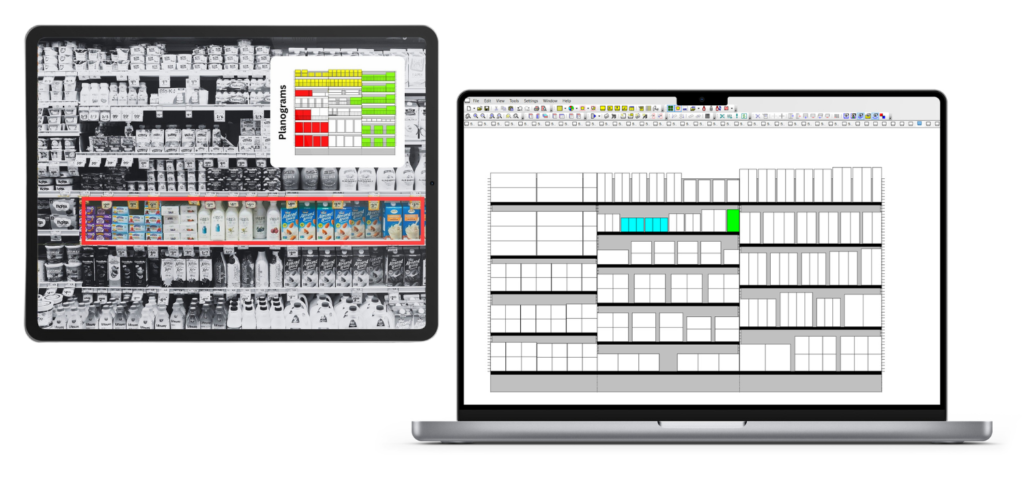
A planogram (POG) is a visual diagram or layout that shows how products should be displayed on retail shelves. It details the exact placement, facing count, shelf height, and product adjacency to ensure that merchandising is optimized for sales and brand performance.
But planograms are more than visual tools—they’re data-driven merchandising blueprints. Each planogram is built using a combination of sales data, shopper behavior insights, category strategies, and store-specific variables.
Planogram data includes:
- Product-level data: SKU details, price, size, and stock availability.
- Performance metrics: Sales velocity, profit margin, and historical sales trends.
- Store compliance data: Whether the display matches the planned layout.
- Category analytics: Insights on which product placements drive higher conversions.
For cosmetics, where shelf layout, color blocking, and brand adjacency can make or break a purchase decision, planogram data helps ensure that every SKU earns its place.
Why Planogram Data Matters in the Cosmetics Category
Unlike many other retail categories, cosmetics thrive on visual appeal and shopper experience. The right display can turn browsing into buying. But without structured, data-backed merchandising, the results can be inconsistent and suboptimal.
Here’s why planogram data is especially critical for cosmetics:
1. It Drives Better Product Visibility
In cosmetics, visibility equals conversion. Planogram data helps identify which product placements—eye-level, top-shelf, or endcap—yield the highest engagement. By analyzing planogram data across stores, brands can determine which SKUs deserve premium placements based on real performance, not assumptions.
2. It Improves Category Balance
Cosmetic categories are often overcrowded, with multiple subcategories (makeup, skincare, haircare, fragrance) competing for space. Planogram data helps maintain the right balance—ensuring each subcategory and brand gets fair and performance-based representation.
3. It Enables Data-Driven Shelf Resets
Seasonal resets are common in cosmetics—new shades, packaging, and trends emerge constantly. With planogram data, these resets can be guided by actual consumer demand and sales data rather than intuition, ensuring that high-performing SKUs get the right exposure at the right time.
4. It Reduces Out-of-Stocks and Overstocks
Planogram compliance data helps identify gaps where products are missing or incorrectly placed, which often leads to lost sales. Real-time planogram audits can alert merchandisers to restock fast-moving SKUs or replace underperforming ones, maintaining inventory accuracy and shelf efficiency.
5. It Strengthens Brand Consistency Across Locations
For cosmetic brands selling through multiple retail partners or store formats, maintaining consistency is a major challenge. Planogram data ensures uniform presentation across stores, reinforcing brand identity and shopper familiarity—a key factor in building trust and loyalty.
Turning Planogram Data into Sales Growth
Planogram data does not just optimize shelf layouts—it translates directly into measurable business outcomes. Let’s break down how this data-driven merchandising approach increases cosmetic category sales.
1. Identifying and Acting on High-Performing SKUs
By analyzing planogram performance data, retailers can identify which SKUs deliver the most sales per square foot. This helps in making more profitable space allocation decisions. For instance, if a certain lipstick shade consistently outperforms others, planogram data ensures it gets more facings and prime shelf positioning.
2. Optimizing Adjacencies for Cross-Selling
Cosmetics shoppers often buy complementary products—foundation with setting spray, or lipstick with lip liner. Planogram data helps identify which product pairings lead to higher basket sizes. Retailers can use this insight to design adjacency strategies that naturally guide customers from one purchase to another.
3. Improving Shopper Experience through Planogram Insights
Shoppers are drawn to organized, easy-to-navigate displays. Planogram data helps retailers understand how shoppers interact with product placements—through planogram compliance audits, heat maps, and sales trends—to continually refine the in-store experience.
4. Tracking and Enforcing Planogram Compliance
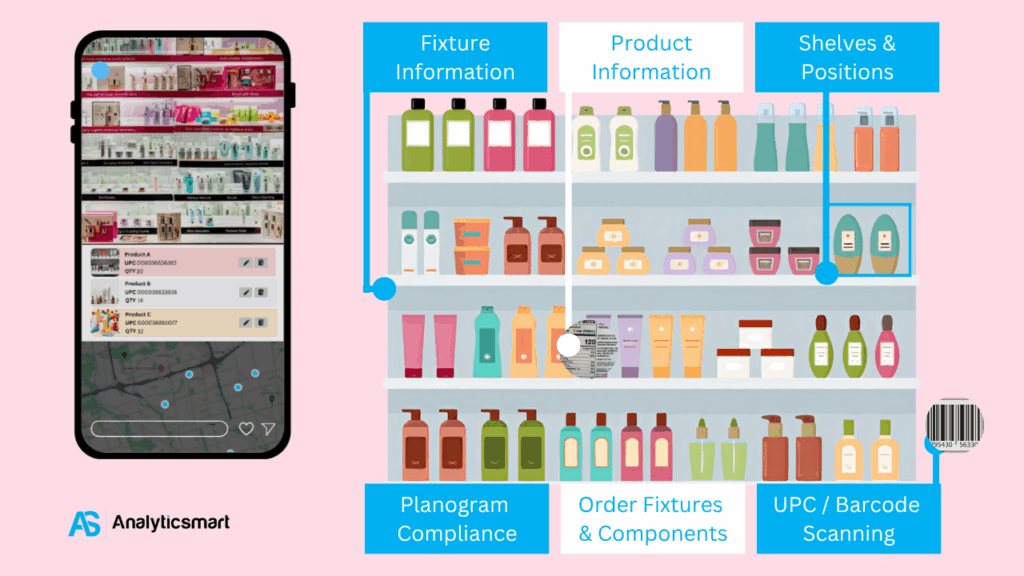
A perfectly designed planogram is useless if not executed properly. By integrating planogram data with in-store image recognition and audit tools, retailers can monitor compliance in real-time. Analyticsmart’s solutions, for example, allow merchandisers to capture on-shelf images, compare them with master planograms, and instantly identify compliance gaps.
5. Enhancing Promotion Effectiveness
Planogram data can be integrated with promotional campaign insights to evaluate how shelf changes affect promo performance. Retailers can track uplift in sales from promotional displays or limited-edition collections and refine their strategies for future activations
Integrating Planogram Data with BI & Visual Analytics
While planogram data alone provides shelf-level insights, its real power emerges when combined with Business Intelligence (BI) and visual analytics.
At Analyticsmart, we specialize in helping retailers and brands integrate planogram data into their broader BI ecosystems. This allows teams to:
- Visualize planogram performance by store, region, or category.
- Correlate shelf space allocation with sales trends and promotions.
- Monitor real-time compliance through image recognition and store audits.
- Build predictive models for optimal product placement before resets.
Our Planogram Analytics Module combines image-based verification, sales data, and shelf metrics into a unified dashboard—empowering retailers and field teams with actionable insights to make every square inch of shelf count.
The Future of Planogram Management in Cosmetics
As AI, computer vision, and automation reshape retail, the next evolution of planogram management will be real-time, intelligent, and predictive.
Here’s what the future looks like:
1. AI-Powered Shelf Recognition
Using image recognition, merchandisers can capture in-store photos and automatically assess compliance, facings, and shelf share. AI can flag discrepancies instantly, reducing audit time and human error.
2. Predictive Shelf Optimization
With predictive analytics, retailers can simulate multiple shelf arrangements and forecast their sales impact before implementation. This allows data-driven decision-making even before a single product is moved.
3. Personalized Merchandising by Store Cluster
Instead of one-size-fits-all layouts, planogram data combined with shopper demographics will enable localized merchandising. For example, stores in urban areas may prioritize skincare and premium cosmetics, while suburban locations focus on daily-use essentials.
4. Integrated Omnichannel Merchandising
As e-commerce and physical stores converge, planogram data will inform both physical shelf and digital shelf strategies—ensuring consistent product visibility and brand storytelling across all touchpoints.
How Analyticsmart Empowers Retailers and Brands
At Analyticsmart, we understand that planogram data is not just about compliance—it’s about growth. Our technology helps transform shelf-level information into strategic business intelligence that fuels sales, efficiency, and brand impact.
Key features of our Planogram Data & Merchandising Analytics Solution include:
- Automated Compliance Tracking: Capture and compare real-time shelf images with planogram standards using AI.
- Shelf Performance Dashboards: Visualize product facings, compliance scores, and sales correlations.
- Actionable Insights: Identify opportunities to improve shelf share, optimize facings, and enhance product visibility.
- Customizable Reporting: Track KPIs such as compliance rate, sales lift, out-of-stock frequency, and planogram ROI.
- Field Team Enablement: Empower merchandising teams with mobile tools to audit, capture, and correct shelf issues on the go.
By integrating planogram analytics with sales data and visual BI dashboards, Analyticsmart enables cosmetic retailers and brands to execute shelf strategies that are not only visually appealing—but also measurably profitable.
Conclusion
In today’s beauty retail landscape, shelf space is as strategic as any marketing campaign or digital investment. With countless brands vying for attention, the winners are those who can combine creativity with intelligence—merchandising art with data science.
Planogram data is the bridge that connects these two worlds. It transforms shelves into sales engines, turning every display into an opportunity for conversion, consistency, and customer delight.
By partnering with Analyticsmart, cosmetic retailers and brands can harness the full potential of planogram data—driving smarter merchandising, higher compliance, and ultimately, stronger sales growth across every store and display.
Ready to elevate your cosmetics merchandising strategy?
Discover how Analyticsmart’s Planogram Analytics Solution can help your brand unlock shelf-level intelligence and accelerate sales.
