
Merchandising App: Revolutionizing Retail Through Smarter Product Display & Sales Insights
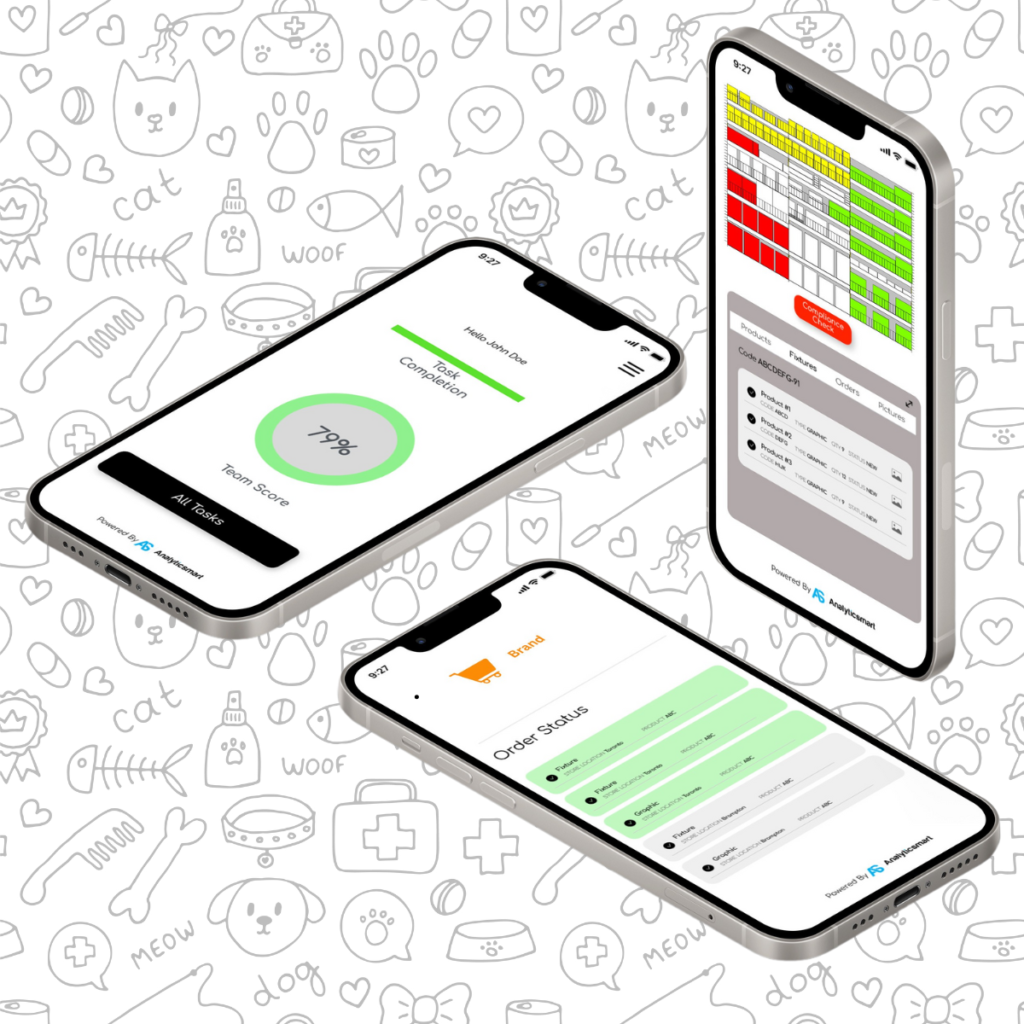
In today’s digitally driven retail landscape, data isn’t just an advantage — it’s a necessity. As competition intensifies and customer expectations evolve, retailers are seeking tools that offer real-time insights, enhance product visibility, and maximize conversion. At the heart of this transformation sits the merchandising app — an intelligent solution that bridges strategy with execution, turning raw data into powerful actions.
In this blog, we’ll explore what a merchandising app is, why it matters, how it works, and how Analyticsmart is helping businesses unlock new levels of retail performance.
What Is a Merchandising App?
A merchandising app is a software platform designed to streamline and optimize how products are displayed, tracked, and sold across various channels — whether in brick-and-mortar stores, ecommerce sites, marketplaces, or omnichannel environments.
Unlike traditional merchandising methods that often rely on manual processes, spreadsheets, and intuition, a merchandising app brings automation, analytics, and real-time visibility into every stage of the merchandising lifecycle. This includes planning assortments, managing layouts, tracking product performance, optimizing pricing, and measuring customer engagement.
At its core, a merchandising app empowers retailers to make data-driven decisions that enhance customer experiences and boost revenue.
Why Retailers Need a Merchandising App
Retailers face mounting challenges:
- Customers expect personalized, seamless experiences.
- Shelf space — physical or digital — is limited.
- Product assortments are growing increasingly complex.
- Competition for attention is intense.
- Price sensitivity and seasonal demand fluctuate constantly.
Traditional merchandising models struggle to keep pace with these demands. Here’s where a merchandising app makes the difference.
1. Gain Real-Time Insights
Retailers need instant clarity on what’s selling, what isn’t, and why. A merchandising app provides live data dashboards that track sales trends, inventory levels, and customer behavior — enabling rapid, informed decisions.
2. Improve Product Visibility
Whether a product is displayed on a physical shelf or a website homepage, visibility is key to sales. Merchandising apps help optimize placement based on performance metrics, customer preferences, and predictive trends.
3. Reduce Manual Workloads
Manual tasks — like updating pricing, tracking stock, or reshuffling displays — consume time and increase errors. Automation features in merchandising apps free up teams to focus on strategy rather than repetitive execution.
4. Predict Demand More Accurately
By leveraging analytics and machine learning, merchandising apps can forecast demand with greater precision. This minimizes stockouts or overstock situations and improves customer satisfaction.
5. Support Omnichannel Merchandising
Today’s customers expect consistency across channels — online, in-store, and mobile. A merchandising app centralizes channel data, ensuring cohesive strategies and seamless customer experiences.
Key Features of a High-Impact Merchandising App
A great merchandising app isn’t just about data collection — it’s about turning data into action. Below are essential features that drive ROI for retail businesses:
1. Centralized Product Catalog
A unified repository that connects product information, pricing, attributes, and visuals across platforms, eliminating data silos and ensuring consistency.
2. Smart Assortment Planning
Algorithms analyze historical sales, seasons, and market trends to suggest precise product assortments tailored to each store, region, or online segment.
3. Visual Merchandising Tools
Drag-and-drop layout designers, planogram builders, and display templates help teams craft visually compelling shelves — digital and physical — based on best-practice principles.
4. Inventory & Stock Alerts
Automatic notifications for low stock, replenishment needs, or excess inventory empower retailers to act before problems arise.
5. Pricing Optimization
Features that recommend pricing strategies based on competitor data, demand elasticity, and profit goals help retailers stay competitive while protecting margins.
6. Advanced Analytics & Reporting
Custom dashboards provide insights into product performance, customer trends, and merchandising outcomes. Users can filter data by store, category, region, or timeline for precise analysis.
7. Machine Learning & Predictive Insights
AI capabilities forecast sales, detect patterns, and offer recommendations — transforming historical data into future strategies.
8. Mobile Accessibility
Retail teams on the ground — floor managers, merchandisers, auditors — benefit from mobile apps that offer real-time insights and task lists, regardless of location.
How a Merchandising App Works: Step by Step
Understanding how a merchandising app functions helps retail leaders envision its impact across teams.
Step 1: Data Integration
The app connects to point-of-sale systems, inventory databases, ecommerce platforms, CRM tools, and marketplace APIs. This aggregated data forms the foundation for insights.
Step 2: Smart Analysis
AI and analytics engines process the data to generate actionable insights: Which products are trending? Where are sales lagging? How is customer engagement evolving?
Step 3: Merchandising Strategy
Based on insights, retailers can adjust pricing, reorganize assortments, launch promotional strategies, or reposition products — all within the platform.
Step 4: Execution
Digital planograms, store layouts, and online displays are deployed. Mobile alerts guide staff through replenishment, cross-merchandising, and display updates.
Step 5: Monitoring & Optimization
Performance is tracked continuously. The app measures key metrics — sales lift, conversion rates, stock turnover, customer engagement — and suggests tweaks for further improvement.
Real-World Benefits of Using a Merchandising App
Retailers adopting merchandising apps report transformative outcomes across KPIs. Here’s how:
Boosted Sales Performance
By putting the right products in optimal positions and pricing them strategically, retailers see measurable improvements in conversion and average order value.
Reduced Inventory Costs
Predictive demand planning minimizes excess stock and stockouts, reducing carrying costs and lost sales.
Improved Customer Satisfaction
Products customers want are in stock and easy to find — a major differentiator in a competitive market.
Operational Efficiency
Teams spend less time on manual tasks and more time on strategy, creative merchandising, and customer engagement.
Enhanced Competitive Edge
Retailers gain insights that let them respond to trends faster than competitors — whether in price changes, product launches, or seasonal shifts.
Use Cases: Merchandising App in Action
Here are practical scenarios where a merchandising app drives business value:
Omnichannel Consistency
A retail brand integrates online and in-store inventory and ensures customers see accurate availability across channels. The app synchronizes pricing and promotions, reducing confusion and increasing trust.
Seasonal Campaign Success
During peak seasons — like back-to-school or holiday sales — the merchandising app predicts demand spikes and recommends assortments and pricing strategies that maximizes revenue.
Localized Assortments
Stores in different regions often perform differently. A merchandising app analyzes local preferences and suggests unique assortments that resonate with specific demographics — boosting engagement and sales.
Price Optimization for Competitive Markets
A retailer facing aggressive pricing competition uses analytics to adjust prices dynamically, protecting margins while remaining appealing to price-sensitive shoppers.
Measuring Success: Key Metrics Tracked Through a Merchandising App
To truly understand the impact of merchandising efforts, retailers should monitor the following metrics:
- Sales Lift: Growth in revenue attributed to changes in product placement or pricing.
- Conversion Rate: Percentage of customers who make a purchase.
- Average Order Value (AOV): Revenue per transaction.
- Inventory Turnover: How often stock is sold and replaced — a sign of merchandising effectiveness.
- Gross Margin Return on Investment (GMROI): Profitability relative to inventory investment.
- Customer Engagement Metrics: Click-through rates on digital merchandising, foot traffic patterns in store, and dwell times near featured products.
Monitoring these metrics in real time enables continuous improvement — a hallmark advantage of using a merchandising app.
Common Challenges & How a Merchandising App Solves Them
Even the most experienced retail teams face persistent pain points. Here’s how a merchandising app addresses them:
Challenge: Data Silos Across Systems
Retail data is often scattered across disparate systems — POS, ecommerce, inventory, CRM.
Solution: A merchandising app centralizes data, offering a single source of truth.
Challenge: Time-Consuming Manual Processes
Updating prices, compiling reports, and planning assortments manually takes hours of labor.
Solution: Automation reduces manual work and improves accuracy.
Challenge: Slow Response to Market Trends
Retail trends change fast — months of manual analysis isn’t fast enough.
Solution: Real-time insights and predictive analytics speed up decision-making.
Challenge: Disjointed Omnichannel Experience
Customers expect unified experiences across channels — which is hard without integrated data.
Solution: The app synchronizes merchandising strategies across digital and physical touchpoints.
How Analyticsmart Elevates Merchandising Strategy
At Analyticsmart, we believe that the future of retail hinges on actionable intelligence.
Our merchandising app brings together advanced analytics, intuitive dashboards, predictive models, and seamless integrations that empower retailers to:
✔ Understand customer preferences at scale
✔ Automate routine merchandising tasks
✔ Plan assortments with precision
✔ Respond to market changes instantly
✔ Drive more profitable outcomes
Whether you’re a seasoned retail leader or a digital transformation beginner, Analyticsmart’s merchandising solution equips you with tools that grow with your business.
Conclusion: The Future of Merchandising Is Smart, Connected & Data-Driven
Merchandising is no longer about gut instincts and manual spreadsheets. Today’s retail success depends on real-time data, intelligent automation, and seamless omnichannel strategies — and a merchandising app is the central hub that makes all of this possible.
By embracing a data-driven merchandising platform, retailers can:
➡ Boost conversions
➡ Optimize inventory
➡ Improve customer satisfaction
➡ Stay agile in competitive markets
At Analyticsmart, we’re committed to helping retailers harness the power of analytics to transform merchandising from an operational necessity into a strategic advantage.
Ready to rethink your merchandising strategy?
Transform your retail experience with Analyticsmart’s merchandising app — where data meets action.
