
Specialty Store Merchandising: Small Footprint, No Room for Error
Specialty retailers operate under a constraint that big-box and grocery chains rarely have to think about: there simply isn’t much room for error. A supercenter with 50,000 square feet can absorb a poorly performing shelf section without much consequence — it’s a small fraction of the total footprint. A specialty store with 1,500 square feet doesn’t have that luxury. Every fixture, every facing, and every shelf decision carries outsized weight, because there’s so little total space to work with.
Curation Over Comprehensiveness
The single biggest difference between specialty store merchandising and big-box merchandising is philosophy. Big-box retail often competes on breadth — the widest possible assortment, giving shoppers every option under one roof. Specialty retail generally can’t win that fight, and shouldn’t try. Instead, the winning strategy is curation: a smaller, more intentional assortment that reinforces a distinct point of view and makes every shopper feel like the store was built specifically for them.
This changes how a planogram should be built from the ground up. Rather than maximizing SKU count per category, specialty store planograms should be asking a harder question for every single facing: does this product earn its place on this shelf? A specialty retailer that tries to stock a “little bit of everything” in an attempt to compete with bigger stores usually ends up with a cluttered, unfocused space that undermines the exact value proposition that makes specialty retail appealing in the first place.
Every SKU Is a Decision, Not a Default
In a large-format store, adding a marginal SKU to a category is a relatively low-stakes decision — there’s plenty of shelf space to absorb it, and if it underperforms, it’s a small loss relative to the whole store. In a specialty store, adding one SKU almost always means removing another, because shelf space is fundamentally scarce. This forces a level of planogram discipline that many larger retailers never have to develop: every product placement decision needs to be justified by data, not habit or vendor pressure.
This is where sales-per-facing analysis becomes especially valuable for specialty retailers. Rather than reviewing category performance broadly once or twice a year, specialty retailers benefit from a tighter, more frequent review cycle — because a single underperforming shelf section represents a much larger percentage of total store revenue than it would in a big-box environment.
Brand Storytelling in a Compressed Space
Specialty retail also carries a heavier storytelling burden per square foot. Shoppers choose a specialty store specifically because they expect a distinct experience — whether that’s a curated selection of natural foods, a specific aesthetic in a boutique, or deep expertise in a niche category. The planogram has to reinforce that story visually, not just functionally. This often means slightly lower density displays with more breathing room around hero products, clear thematic groupings, and fixtures that feel intentional rather than purely functional.
Balancing this storytelling instinct with commercial performance is one of the harder parts of specialty merchandising. A beautifully curated display that doesn’t convert is still a failure, no matter how well it fits the brand aesthetic. The best specialty retailers treat visual storytelling and sales performance as equally weighted inputs to every planogram decision, rather than letting one dominate the other.
Compliance Monitoring at Smaller Scale
It might seem like compliance monitoring matters less in a small store — after all, there’s less shelf space and fewer staff to manage. In practice, the opposite is often true. Specialty stores typically operate with leaner staffing than big-box locations, which means there’s less redundancy if a single employee misses a scheduled reset or misplaces a product. A drifted planogram is also more visually obvious in a curated small-format store than it would be in a sprawling supercenter, because the whole point of the space is careful intentionality.
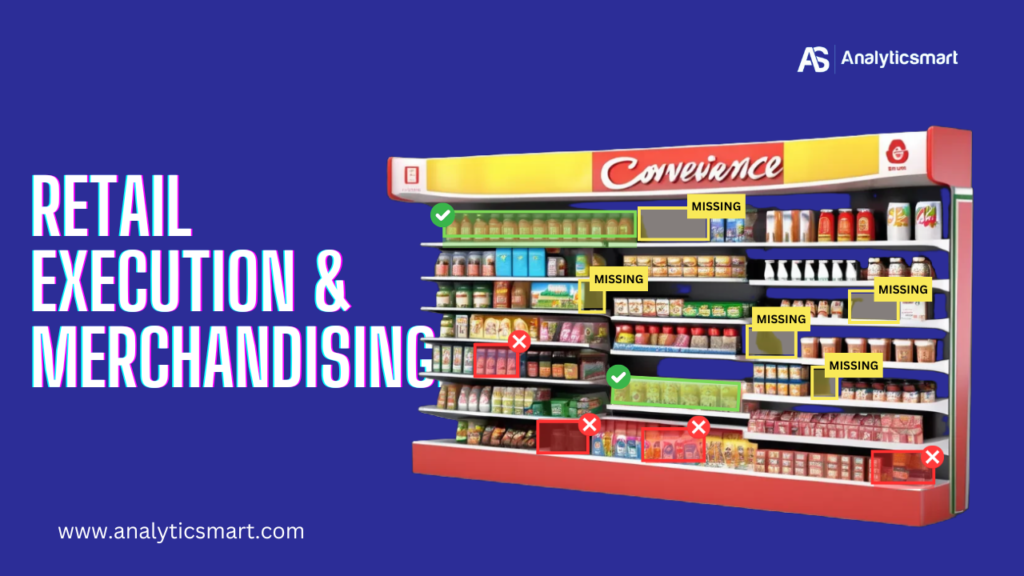
This makes tools like AI-powered image recognition audits particularly valuable for specialty retail chains with multiple locations. A quick photo-based compliance check can catch drift before it accumulates into a layout that no longer resembles the approved design — something that’s especially important given how visible any inconsistency becomes in a smaller space.
Multi-Location Consistency Without Losing Local Character
Many specialty retail chains face a tension between maintaining brand consistency across locations and allowing enough local flexibility to reflect neighborhood demand or store-specific footprint quirks. A rigid, one-size-fits-all planogram can feel out of place in a store with a different layout or a different local customer base. A completely decentralized approach, where every store manager builds their own layout, quickly erodes brand consistency and makes performance benchmarking nearly impossible across the chain.
The middle path — and the one most successful specialty chains land on — is a centralized planogram framework with defined flexibility zones. Core brand-defining sections stay consistent everywhere, while a smaller percentage of shelf space is left open for local assortment adjustments, informed by store-level sales data rather than manager preference alone.
Why This Matters More Than Ever
As big-box and online retailers continue to expand assortment and convenience, specialty retailers increasingly compete on experience and curation rather than price or breadth. That makes disciplined, data-backed merchandising more important, not less. For specialty retail, the planogram isn’t a secondary operational tool — it’s the physical expression of the entire brand strategy, compressed into a few hundred square feet where every decision counts.
