
From Dashboards to Decisions: Using BI to Optimize Pricing, Promotions, and Mix

In today’s competitive marketplace, businesses face a crucial challenge: how to extract actionable insights from ever-expanding pools of data. Customers are more informed, markets are more volatile, and product portfolios are more complex. Static reports and intuition no longer cut it. What organizations need is intelligence — not just data — and the ability to turn that intelligence into action.
Business Intelligence (BI) solutions — with dashboards, analytics, and automated insights — are central to driving smarter decisions in key revenue areas: pricing, promotions, and product mix. In this article, we’ll explore how BI transforms raw data into strategic decisions that improve profits, customer satisfaction, and competitive agility.
Why BI Matters Now More Than Ever
Business Intelligence isn’t just about pretty dashboards — it’s about context, speed, and insight. Organizations equipped with modern BI capabilities can:
- Analyze real-time performance trends
- Detect emerging customer behaviors
- Model “what-if” scenarios for pricing or assortment
- Forecast impacts of promotions before execution
- Align cross-functional teams around a shared view of truth
Where traditional reporting answers what happened, BI answers why it happened, what’s likely to happen next, and what we should do about it.
This shift — from reactive to proactive decision-making — is especially vital in three revenue levers: pricing, promotions, and product mix.
1. Pricing Optimization: More Science, Less Guesswork
The Pricing Paradox
Setting the right price is both an art and a science. Price too high and you risk losing demand; price too low and you erode margins. Historically, many companies relied on gut instinct, benchmarking, or cost-plus methods — all of which miss critical market dynamics.
How BI Enhances Pricing Decisions
Modern BI platforms ingest data from internal systems (sales, CRM, ERP) and external sources (competitor pricing, market demand signals) to provide a holistic view of price performance:
- Price elasticity analysis — Understand how changes in price impact demand across products and segments.
- Competitive pricing intelligence — Track competitor pricing movements and identify opportunities to capture market share without margin sacrifice.
- Margin contribution modeling — Go beyond revenues and assess the true impact of price changes on profit.
- Segment-specific pricing — Tailor prices dynamically to customer segments, channels, or regions based on behavior.
Real-Time Pricing Dashboards
A BI pricing dashboard typically includes:
| Insight | Purpose |
|---|---|
| Average Selling Price (ASP) by SKU | Monitor price trends over time |
| Price Elasticity Scores | Determine sensitivity of demand to price changes |
| Competitive Price Position | Track where your prices sit relative to key competitors |
| Margin Impact Projections | Forecast profit outcomes under different price levels |
With these visual and interactive views, pricing teams can move from monthly static reports to continuous monitoring and rapid decision cycles.
2. Promotions: Precision Over Price Slashing
The Pitfalls of Traditional Promotion Planning
Promotions are one of the most expensive marketing activities. A poorly executed promotion can erode profits faster than it drives incremental sales. Common mistakes include:
- Offering discounts that don’t stimulate enough incremental demand
- Running overlapping campaigns that cannibalize each other
- Applying one-size-fits-all promotions across diverse customer segments
With BI, promotions are not guesswork — they become measured experiments.
BI-Driven Promotion Analytics
Here’s how BI guides smarter promotional strategies:
A. Promotion Effectiveness Tracking
BI tracks promotional lift by comparing performance during promotional periods against expected baseline sales — controlling for seasonality, trends, and external events.
Key Metrics:
- Incremental sales lift (%)
- Net profit contribution
- Cannibalization rates (impact on non-promoted SKUs)
- Return on Promotion Investment (ROPI)
B. Scenario Modeling Before Execution
BI platforms enable simulation of multiple promotion designs before launch:
What if we increase discount from 15% to 20% for Product A?
What happens if we change the bundle rather than discount?
How does a BOGO compare to tiered rewards?
By modeling these scenarios with historical data, companies can forecast impact, choose optimal structures, and allocate marketing spend more wisely.
C. Segment-Aware Promotion Targeting
Not all customers respond the same way. BI allows segmentation based on:
- Purchase frequency
- Price sensitivity
- Lifetime value
- Channel preferences
Promotions can then be tailored — such as loyalty rewards for high-value segments or attention drivers for occasional shoppers — increasing efficiency and customer satisfaction.
3. Product Mix Optimization: Right Product, Right Place, Right Time
Why Product Mix Matters
Product mix — the assortment and positioning of products offered — significantly influences revenue, inventory costs, and customer experience. Too many SKUs can dilute focus and inflate costs; too few can limit choice and reduce share.
The key is not simplification for its own sake, but strategic assortment decisions backed by data.
BI-Powered Insights for Product Mix
BI helps companies answer critical questions such as:
- Which products deliver the most profit?
- Which SKUs are underperforming relative to peers?
- How does seasonal demand fluctuate across categories?
- Where do stockouts and overstocks occur most often?
By combining sales data with inventory, customer behavior, and external trend signals, BI drives assortment optimization and intelligent shelf planning.
A. Portfolio Performance Dashboards
These dashboards typically illuminate:
- SKU profitability heatmaps
- Contribution to overall revenue and margin
- Inventory turnover and holding costs
- Forecasted demand trends by category
This level of insight uncovers “hidden gems” (products with strong growth potential) and identifies candidates for rationalization.
B. Channel-Specific Mix Decisions
Brick-and-mortar, e-commerce, and wholesale channels often exhibit different buying patterns. BI can segment mix decisions by channel:
- E-commerce may favor long-tail SKUs
- Retail stores may prioritize fast-moving essentials
- Wholesale channels may align with bulk demand
With this context, companies avoid one-size-fits-all assortment decisions and instead customize product mix by channel performance.
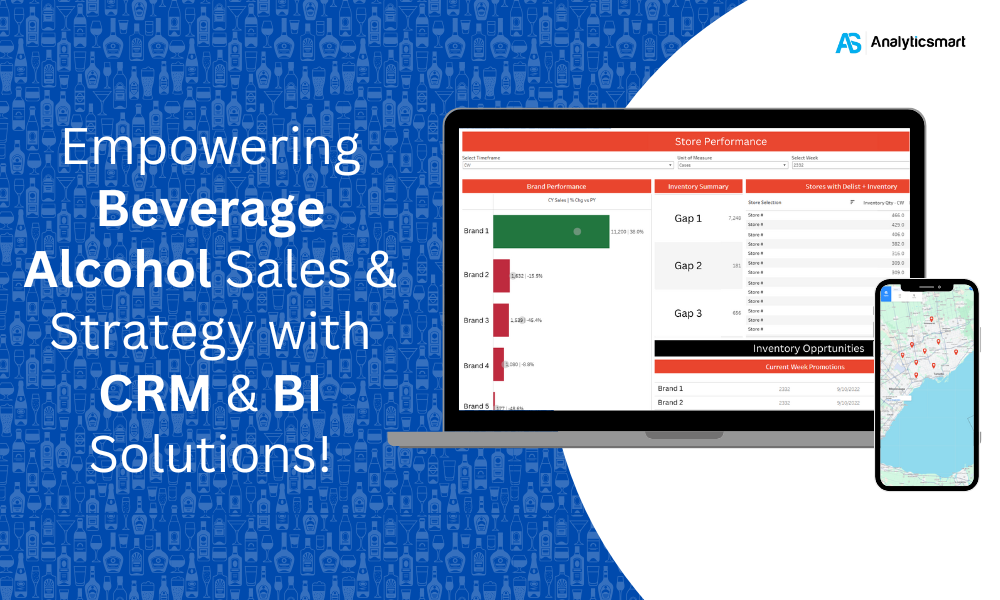
4. From Dashboards to Decisions: Closing the Loop
BI shines brightest not when dashboards are beautiful, but when insights trigger action.
Integrating BI into Decision Workflows
To influence real decisions, BI must be embedded into business processes, such as:
- Daily standups where teams review key performance indicators (KPIs)
- Weekly pricing reviews with alerts for anomalies or opportunities
- Promotion approvals that require predicted ROI before launch
- Quarterly product portfolio planning based on performance patterns
Automation plays a role too — alerts, triggers, and recommended actions can help teams react in real time.
Decision Intelligence: Beyond Reporting
The evolution of BI includes decision intelligence frameworks — where analytics recommend actions, not just describe data. Examples include:
- Algorithmic price optimization that adjusts prices based on market signals
- AI-backed promotion suggestions based on historical elasticity
- Predictive mix recommendations considering future demand curves
This level of intelligence means decisions are informed, fast, and consistent rather than delayed and disjointed.
5. Organizational Culture: The Human Side of BI Success
Even with powerful tools, BI’s impact ultimately depends on how people use it.
Champion Data Fluency
Organizations that derive the most value from BI invest in:
- Training employees to understand and interpret analytics
- Encouraging cross-department collaboration with shared dashboards
- Rewarding data-driven outcomes rather than gut-based opinions
Avoid BI Overload
Too much data can be as harmful as too little. Effective BI implementation emphasizes:
- Clear KPIs aligned to strategic objectives
- Simplified dashboards focused on actionable insights
- Role-based views — executives see what matters to strategy; analysts see granular detail
Clarity and relevance ensure BI becomes a decision support partner, not a distraction.
6. The ROI of BI in Pricing, Promotions, and Mix
Investing in BI delivers measurable returns — but how exactly?
Pricing Optimization Gains
- Increased margin capture from dynamic pricing
- Reduced lost sales from price mismatches
- Better competitive response timing
Promotion Effectiveness
- Higher incremental sales lift
- Lower promotional waste
- Increased customer lifetime value through targeted incentives
Optimized Product Mix
- Reduced inventory carrying costs
- Fewer stockouts and overstocks
- Greater revenue from focused assortments
While outcomes vary by industry and maturity, companies leveraging BI in these areas often see multi-fold improvement over competitors reliant on manual or siloed decision processes.
7. Getting Started: Practical BI Implementation Steps
Embarking on a BI journey doesn’t require perfection from day one. Here’s a roadmap that companies can follow:
Step 1: Assess Data Readiness
Identify core data sources: sales, pricing, inventory, customer behavior, competitor data. Clean and unify data for reliable analytics.
Step 2: Define Key Use Cases
Start with 1–2 initiatives with clear ROI potential — e.g., pricing elasticity analysis, or a promotion lift dashboard.
Step 3: Build Actionable Dashboards
Focus on clarity and decision support. Involve end users (pricing managers, product owners, marketing) early in design.
Step 4: Establish Governance
Ensure appropriate access, data quality standards, and definitions so decisions are based on trusted insights.
Step 5: Operationalize BI
Integrate BI outputs into meetings, workflows, and performance reviews. Trigger alerts for action where possible.
Step 6: Evolve with AI and Predictive Models
As data culture matures, integrate forecasting, machine learning models, and optimization engines to move from insights to recommendations.
Conclusion: Analytics That Change the Game
From dashboards to decisions, BI transforms how businesses manage pricing, promotions, and product mix. The value lies not in data itself, but in the ability to derive relevant insights, surface them at the right moment, and enable teams to act confidently.
Organizations that harness BI effectively gain:
✔ Faster, smarter pricing decisions
✔ Promotion strategies that drive profit — not just discounts
✔ Better assortment planning that balances customer satisfaction with efficiency
✔ A culture where data empowers, not overwhelms
In an era of rapid change and razor-thin margins, the companies that leverage BI to bridge information and action will lead their markets.
